
Digital Marketing: Turning Online Attention into Real Connections
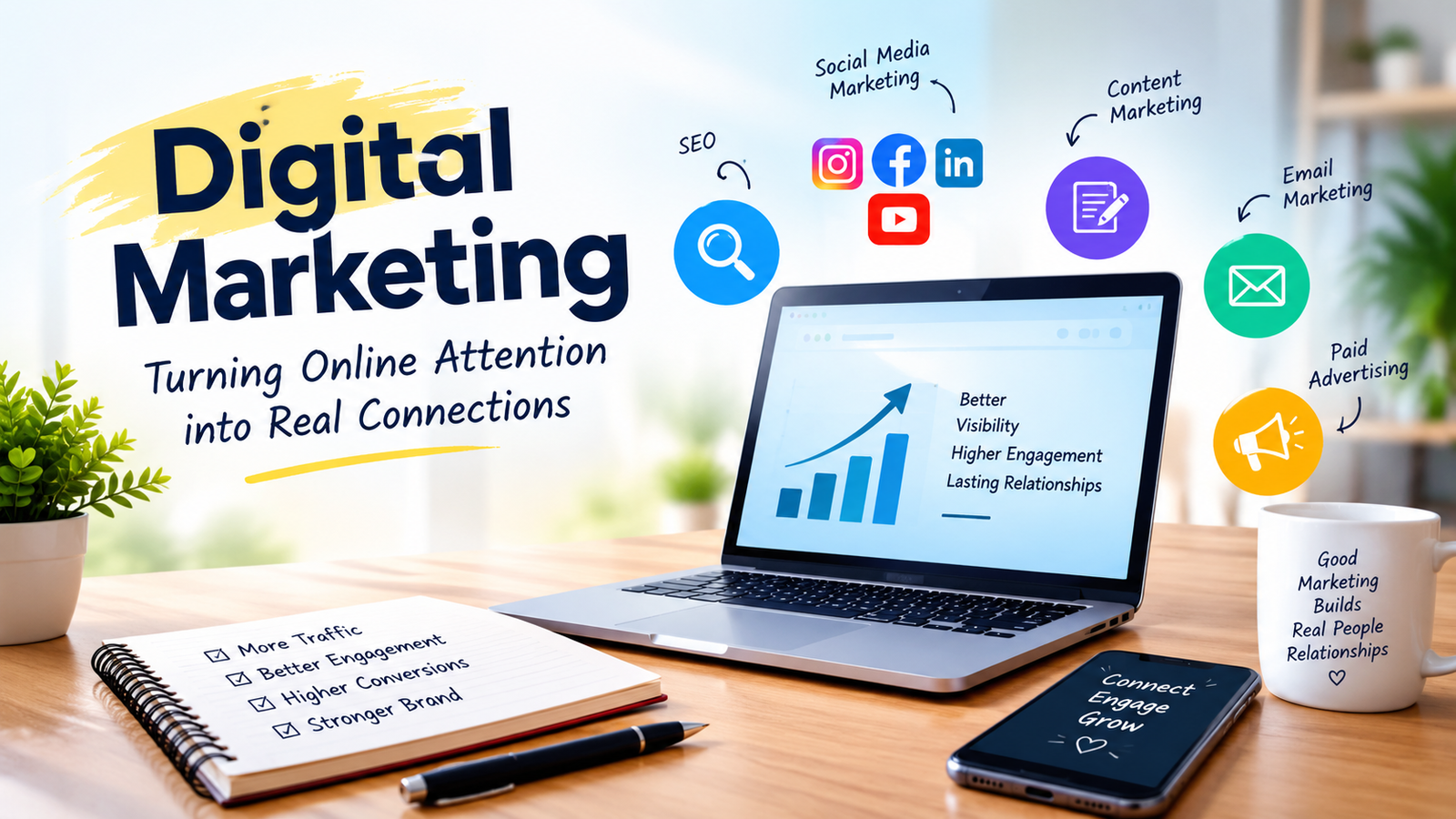
The internet has changed the way people discover products, communicate with brands, and make purchasing decisions. Today, a person can search for a product on Google, watch a review on YouTube, see a recommendation on Instagram, and complete the purchase without ever visiting a physical store. Behind many of these digital experiences is digital marketing.
Digital marketing is more than simply advertising a product online. It is about reaching the right audience, understanding their needs, building trust, and creating meaningful relationships through digital platforms.
What Is Digital Marketing?
Digital marketing refers to promoting products, services, or brands through online channels. These channels include search engines, social media platforms, websites, email, online advertisements, and content platforms.
Traditional marketing depends heavily on newspapers, television, radio, posters, and other offline methods. Digital marketing, on the other hand, allows businesses to communicate with audiences through the platforms they already use every day.
For example, a small clothing business can create an Instagram page, post product photos, collaborate with creators, run advertisements, and direct customers to its website. A business that once depended mainly on local customers can potentially reach people across different cities and countries.
Why Digital Marketing Matters
One of the biggest advantages of digital marketing is accessibility. A business does not always need a huge advertising budget to establish an online presence. Even a small business can create useful content and connect with potential customers.
Digital marketing also provides measurable results. Businesses can monitor website visits, advertisement performance, engagement, leads, and conversions. This information helps marketers understand what is working and what needs improvement.
Another important advantage is communication. Digital platforms allow brands to interact directly with customers. Comments, messages, reviews, and feedback can provide valuable information about customer expectations.
Major Areas of Digital Marketing
Digital marketing includes several different strategies, and each one serves a different purpose.
1. Search Engine Optimization
Search Engine Optimization, commonly known as SEO, focuses on improving a website’s visibility in search engine results.
When someone searches for information online, businesses want their relevant pages to appear where potential customers can find them. SEO involves factors such as useful content, keywords, website structure, page experience, and authoritative links.
Good SEO is not simply about attracting visitors. It is about attracting people who are genuinely interested in the topic, product, or service.
2. Social Media Marketing
Social media has become an important part of modern marketing. Platforms such as Instagram, Facebook, LinkedIn, YouTube, and other networks allow businesses to communicate with specific audiences.
A successful social media strategy is not just about posting advertisements. Brands can share educational content, behind-the-scenes stories, customer experiences, short videos, tips, and other content that encourages people to interact with them.
The goal is to make the brand part of the audience’s online experience rather than simply another advertisement.
3. Content Marketing
Content marketing focuses on creating useful and relevant information for an audience.
A company might publish blogs, videos, guides, infographics, podcasts, or social media posts to answer customer questions. Instead of directly asking people to buy something, the brand provides value first.
For example, a skincare company could publish an article explaining how to build a basic skincare routine. Readers who find the information useful may gradually develop trust in the brand.
4. Email Marketing
Email marketing allows businesses to communicate directly with people who have subscribed to their updates.
Companies can use emails to share newsletters, product announcements, educational information, special offers, and personalized recommendations.
Unlike social media, where algorithms influence what users see, email gives businesses a direct communication channel with subscribers. However, effective email marketing depends on sending relevant information rather than overwhelming people with unnecessary messages.
5. Paid Advertising
Businesses can also use paid digital advertisements to reach specific audiences.
Search advertisements, social media advertisements, display ads, and video advertisements can help businesses promote products and services to people based on factors such as interests, search behavior, demographics, or previous interactions.
The major advantage is targeting. Instead of showing the same advertisement to everyone, businesses can create campaigns for particular audiences.
The Role of Creativity
Technology and data are important in digital marketing, but creativity remains essential.
People see countless pieces of online content every day. A brand therefore needs something that makes its message memorable.
A creative headline, an interesting video, a relatable story, or a simple but powerful visual can capture attention more effectively than a generic advertisement.
However, creativity should have a purpose. A beautiful campaign is not necessarily successful if it does not communicate the right message or connect with the intended audience.
Digital Marketing Is About People
One common mistake is to think of digital marketing only in terms of clicks, followers, and views. Numbers are useful, but behind every number is a real person.
A visitor may be looking for an answer. A customer may be comparing products. Someone may simply be discovering a brand for the first time.
Understanding these different stages helps marketers create better experiences.
The strongest digital marketing strategies often begin with a simple question:
What does the audience actually need?
When businesses understand the answer, they can create content and campaigns that feel more relevant and useful.
The Future of Digital Marketing
Digital marketing continues to evolve as technology and consumer behavior change. Artificial intelligence, automation, short-form video, voice search, personalization, and data-driven strategies are influencing how businesses communicate with audiences.
At the same time, trust is becoming increasingly important. Consumers have more choices than ever, so businesses need to provide genuine value and maintain transparent communication.
The future of digital marketing will not simply belong to businesses that advertise the most. It will increasingly depend on businesses that understand their audiences, adapt to change, and create meaningful digital experiences.
Conclusion
Digital marketing has transformed the relationship between businesses and customers. It has made marketing more measurable, interactive, accessible, and personalized.
But successful digital marketing is not just about appearing on someone’s screen. It is about giving people a reason to stop, listen, engage, and eventually trust a brand.
From SEO and social media to content, email, and paid advertising, every digital marketing strategy has one common purpose: connecting the right message with the right person at the right moment.
In a world where attention is limited, businesses that focus on creating genuine value can build stronger relationships and create a lasting presence online.